
Researchers have uncovered nearly 2,000-year-old Tamil-Brahmi inscriptions inside the royal tombs of Egypt’s famed Valley of the Kings, a finding that profoundly expands our understanding of ancient Tamil presence in the Mediterranean world.
The inscriptions were identified during a study in 2024/2025 led by Professor Charlotte Schmid of the French School of Asian Studis and Professor Inga Strauch of the University of Lausanne. Their work was presented at the International Conference on Tamil Epigraphy held in Chennai earlier this month.
Around 30 Inscriptions, Many in Tamil-Brahmi
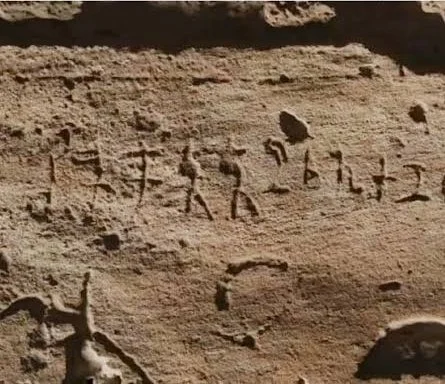
Close to 30 ancient inscriptions have been now been documented in six rock-cut tombs in the Valley of the Kings, an area near ancient Thebes better known for Pharaohs like Ramesses VI. About 20 of these are in Tamil-Brahmi script, the earliest known writing system for Tamil, while others are in Prakrit, Sanskrit and Gandhari-Kharosthi.
Most earlier evidence of Indian contacts in Egypt came from coastal trad ehubs such as Berenike on the Red Sea coast. These new finds show that Tamil visitors travelled much farther inland, reaching major cultural and royal sites.
What was the inscriptions about?
The inscriptions include personal names inscribed on the tomb walls, standing alongside Greek and Latin graffiti left by other ancient visitors. The most prominent is the name “Cikai Korran,” found eight times across five tombs. One inscription reads “Cikai Korran vara kanta,” translated as “Cikai Korran came and saw”, echoing the style of ancient visitor graffiti used across the Mediterranean.
Other Tamil names discovered include “Kopan“, “Catan” and “Kiran“, all also known from early inscriptions in South Indian, linking this discovery directly with the Tamil landscape of the early historic period.
What This Means for History
According to researchers, these inscriptions provide tangible proof that people from ancient Tamil regions did not only trade with Egypt via maritime routes but travelled deep into the interior of the country. The Valley of the Kings was never a port site, making these findings especially significant.
Tamil Nadu’s Finance and Archaeology Minister Thangam Thennarasu welcomed the discovery, noting that it serves as a reminder of the ancient global footprint of Tamil civilisation and its long-standing role in maritime and cultural exchanges.
The discovery highlights how interconnected the ancient world was, where Tamil merchants and travellers were moving across oceans, interacting with distant cultures, and leaving their marks in places as iconic as the Valley of the Kings, centuries before modern globalization existed.
Source: Astro Ulagam, Tamil Guardian
Follow us on Instagram, Facebook or Telegram for more updates and breaking news.