



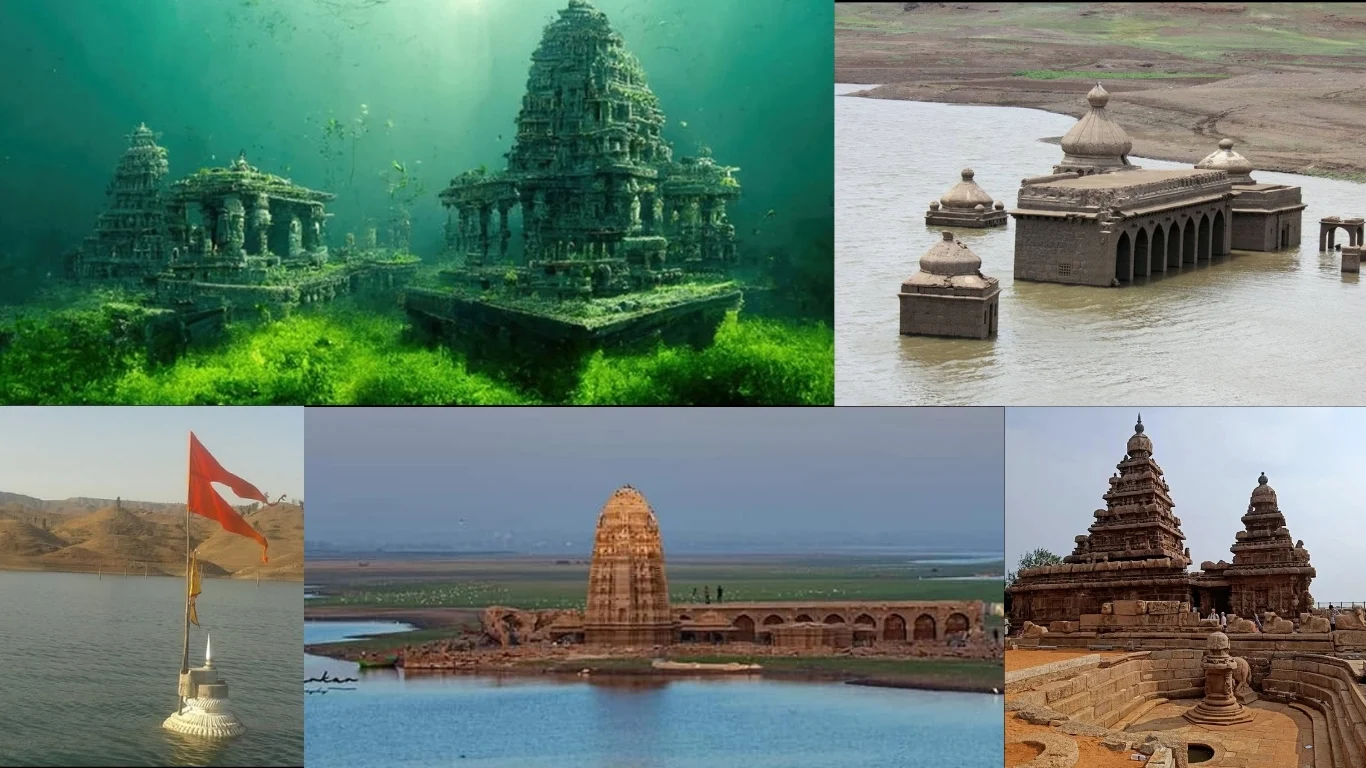
A nearly 175-year-old Shivan temple in Malda, West Bengal, recently collapsed into the Ganga River after severe riverbank erosion weakened the land beneath it. The temple had reportedly been facing the threat of erosion since last uear, with temporary protective measures where put in place to prevent its collapse. However, as floodwaters rose and a large section of the riverbank gave away, the historic temple was eventually swallowed by the river.
The incident is a reminder that India’s rivers and coastlines have, over centuries, reshaped the landscape and claimed parts of its religious and architectural heritage.
From ancient settlements beneath the Arabian Sea to temples hidden beneath the waters of the Mahanadi, several temple structures across India have been submerged or lost due to changing river courses, flooding, coastal erosion, tsunamis, and rising water levels.
Dwarka (Gujarat)
The submerged remains off Dwarka on the Gujarat coast are among India’s most famous underwater heritage sites. Hindu tradition associates the ancient city of Dwarka with Lord Krishna and describes the city as having been swallowed by the sea.
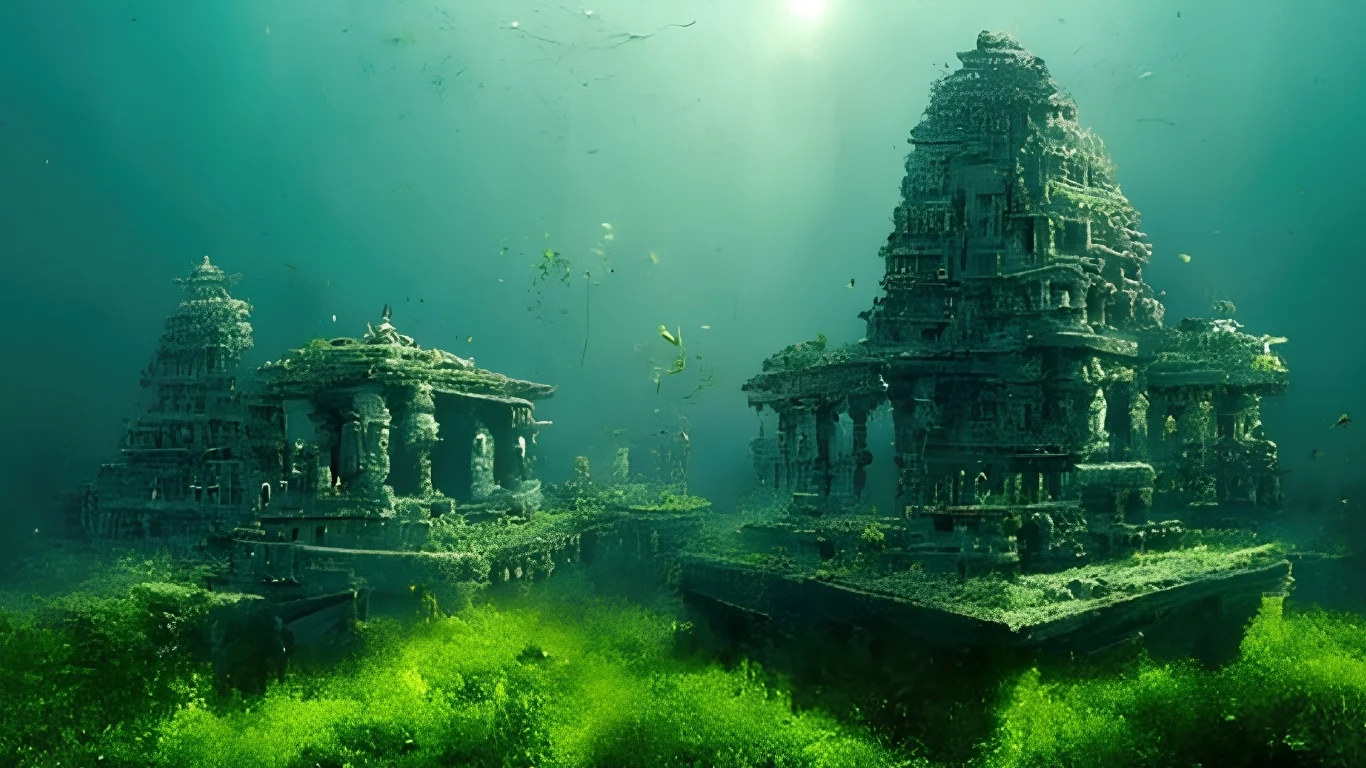
Marine archaeological explorations conducted off Dwarka and Bet Dwarka have uncovered submerged fortification walls, stone structures, a jetty and temple remains. Archaeological interpretations of the site and the date of its submergence have varied, with some earlier research suggesting a major submergence around the 14th century BCE, while other researchers continue to debate the chronology of the remains.
The Seven Pagodas (Mahabalipuram, Tamil Nadu)
Mahabalipuram’s Shore Temple is closely associated with the long-standing legend of the “Seven Pagodas”, which holds that six other temples once stood alongside the surviving Shore Temple before being swallowed by the sea.
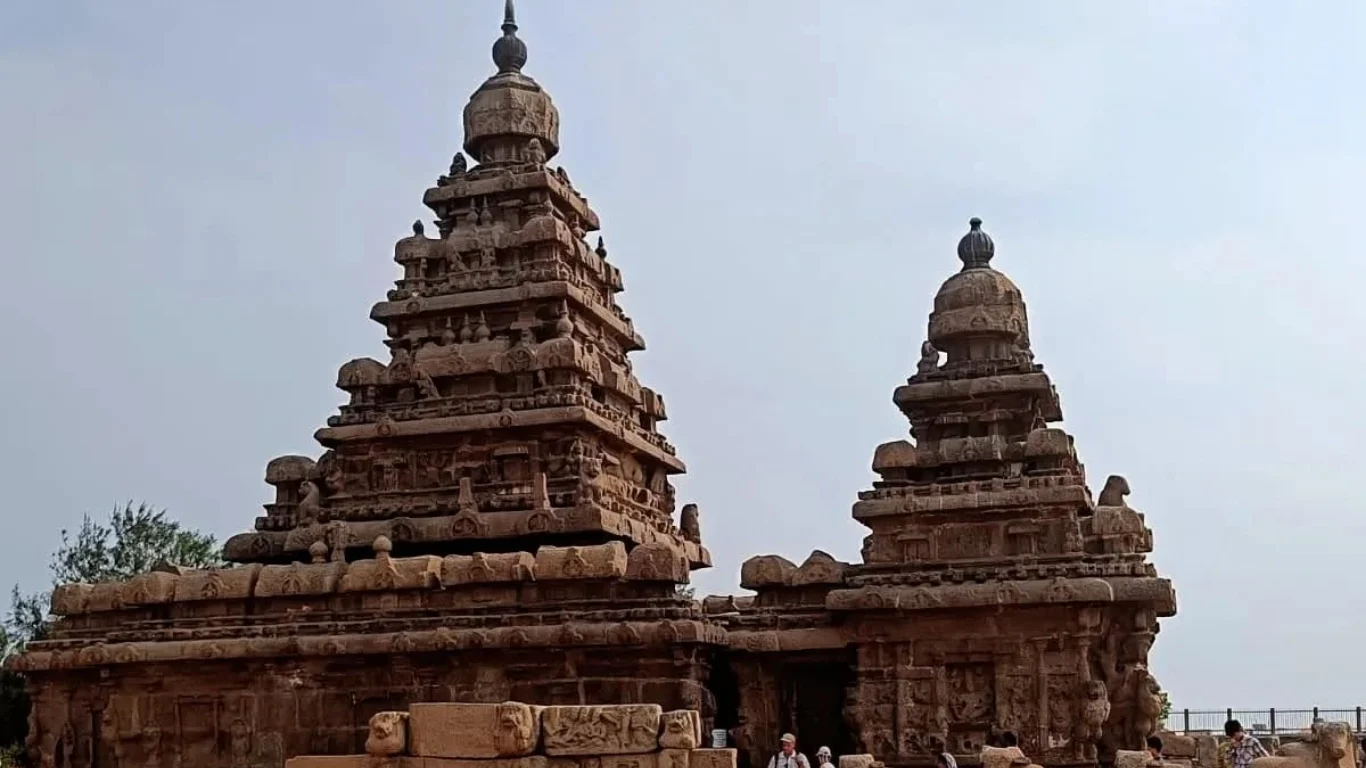
Underwater archaeological surveys have found masonry blocks, walls, stepped structures and other remains off the coast. Research by India’s National Institute of Oceanography has suggested that severe coastal erosion played an important role in the submergence of these structures, while later studies have also considered cyclones, tsunamis and changes in sea level as possible factors.
Gopinath Temple (Mahanadi River, Odisha)
In Odisha, the Mahanadi River holds the remains of a centuries-old temple that disappeared beneath the river after the river changed its course.
The Gopinath Dev temple near Padmabati village in Nayagarh district is believed to have been built around the late 15th or early 16th century. The approximately 60-foot temple was submerged after the river altered its course, with reports linking the wider submergence of the village to major flooding in the 19th century. During periods when the river level falls, the upper portion, or *mastaka*, of the temple can emerge from the water.
Palasnath Temple (Maharashtra)
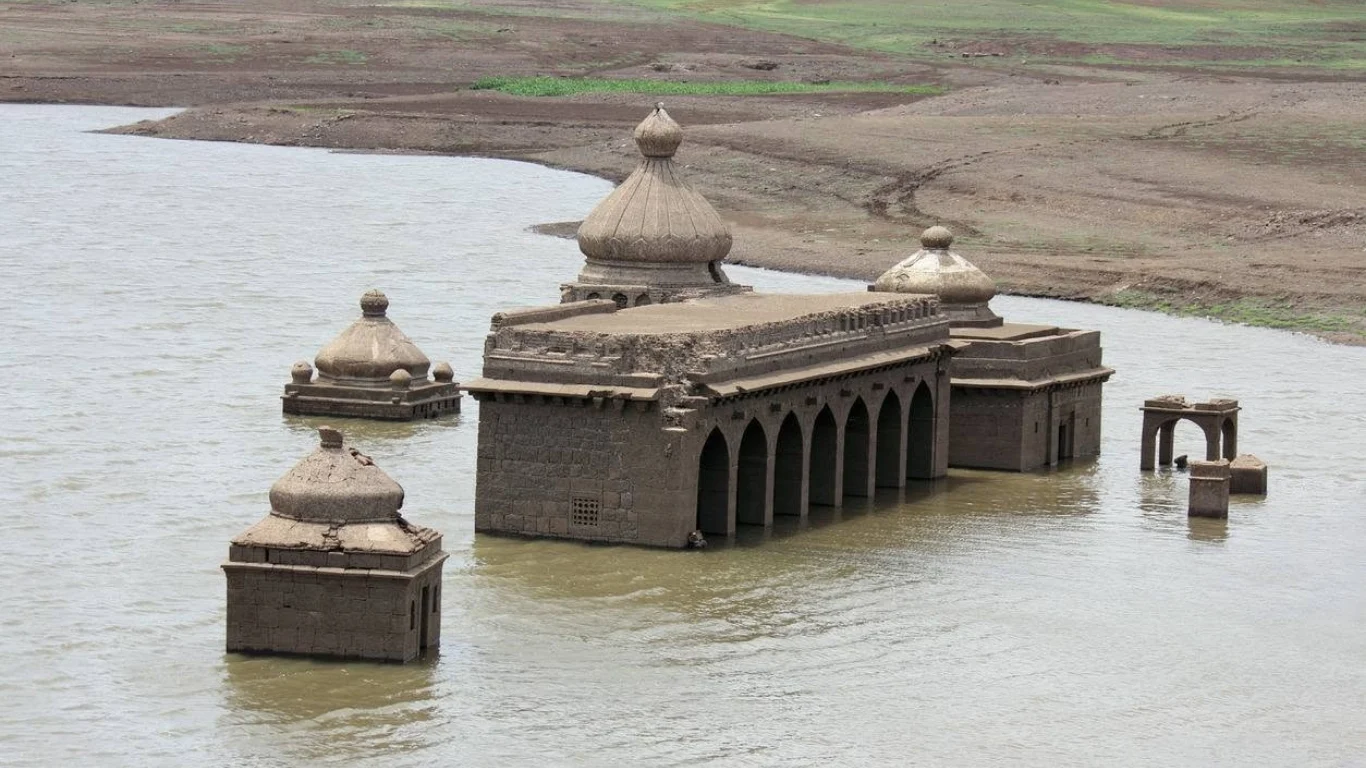
The Palasnath Temple in Maharashtra is a different example of submergence, as its disappearance beneath water was linked not to natural coastal erosion but to the creation of a reservoir.
The ancient temple, dedicated to Lord Shiva and Vishnu and known for its historic stone architecture, lies within the Ujani reservoir area. When water levels fall significantly during periods of drought, parts of the temple become visible again, allowing visitors to see architectural details that normally remain underwater.
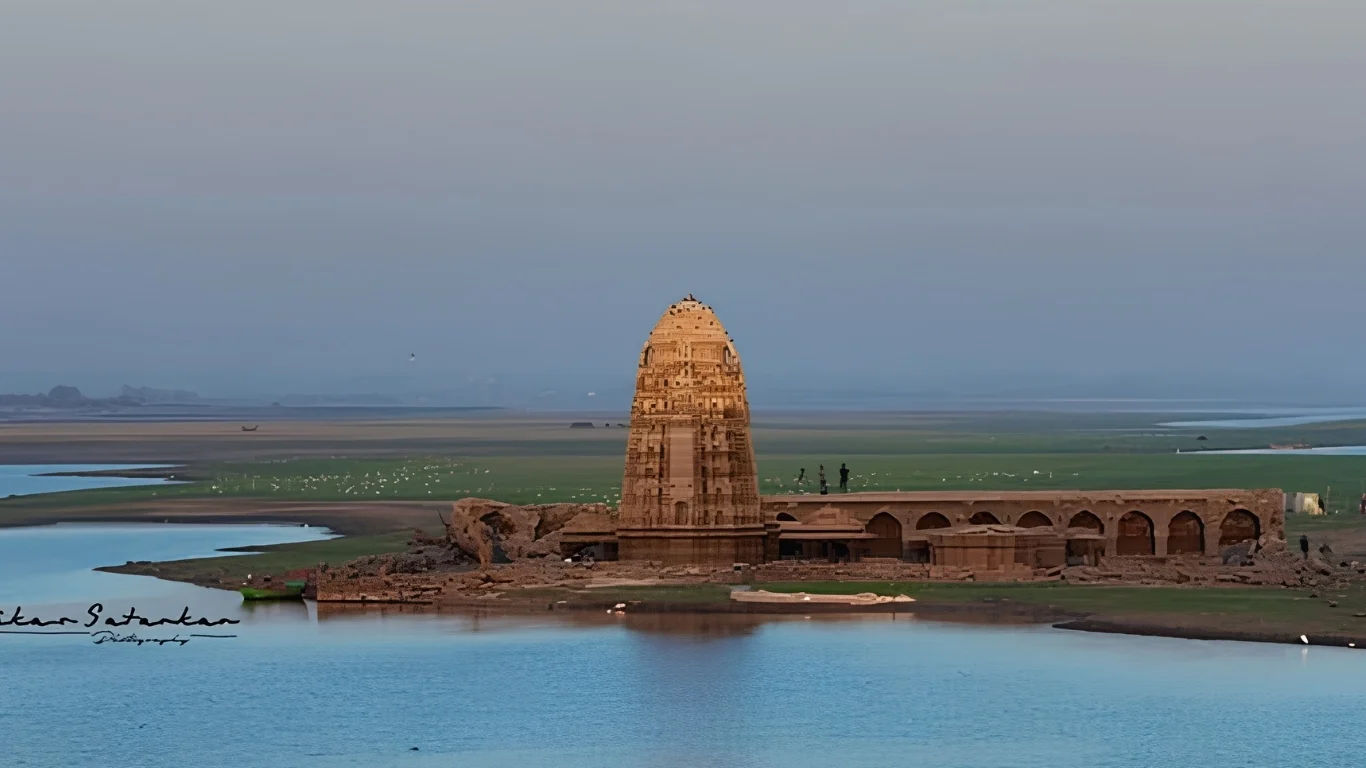
Unlike the temples lost through natural erosion or flooding, Palasnath represents another way in which historic religious structures can become submerged, through changes to the landscape caused by large water infrastructure projects.
Hafeshwar Temple (Narmada)
The Hafeshwar Temple, dedicated to Lord Shiva, is another temple associated with the changing waters of the Narmada River.
The temple lies within the Narmada’s reservoir system and can remain underwater when water levels are high. When the reservoir level drops, particularly during periods of low rainfall, the structure can emerge from the water once again.
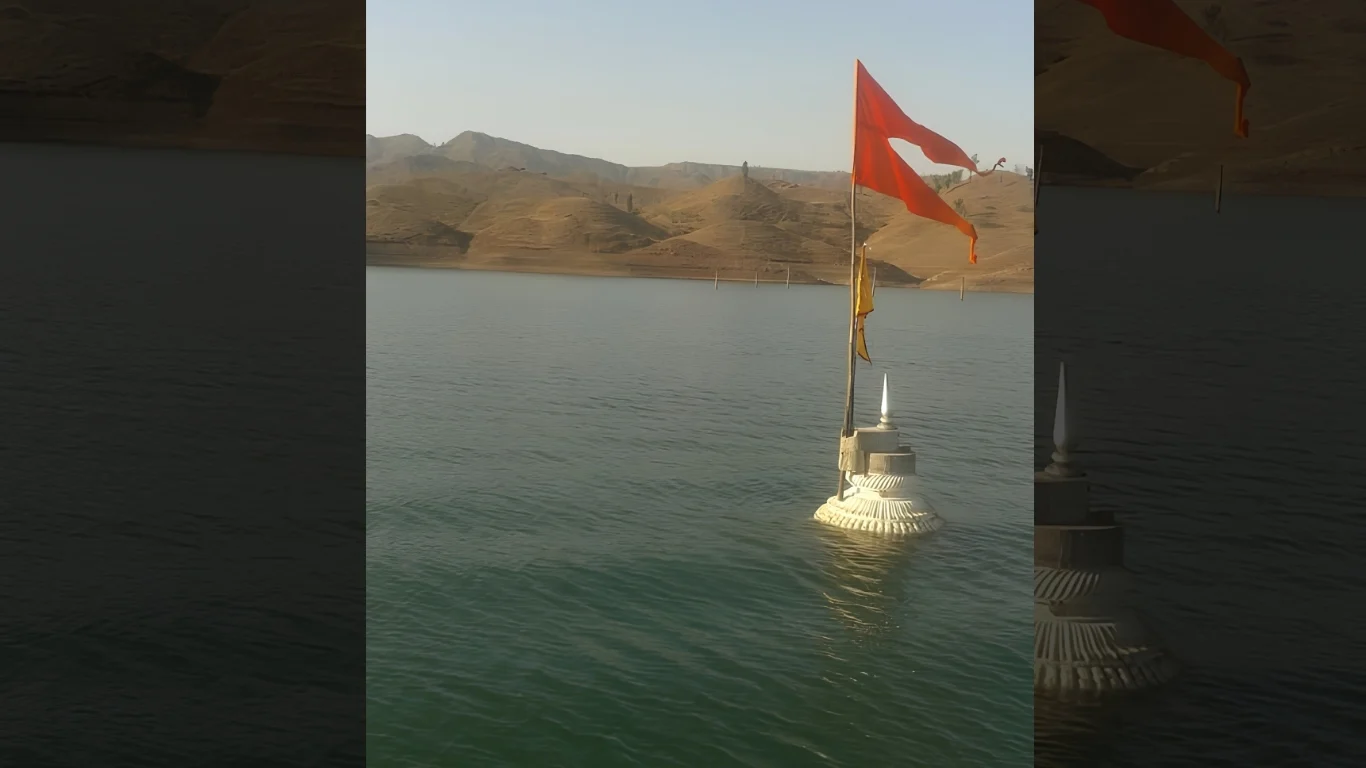
Its repeated appearance and disappearance highlights how water levels can determine the visibility and accessibility of historic religious structures, turning them into a form of seasonal underwater heritage.
A Heritage Slowly Disappearing
From the Ganga and Mahanadi to the Arabian Sea and Bay of Bengal, these stories show how closely India’s religious heritage is connected to its waterways.
Some structures were lost centuries ago through floods, changing river courses and coastal processes, while others became submerged because of reservoirs and modern water projects. In several cases, archaeology has only recently begun to reveal what lies beneath the water.
The recent collapse of the Shiva temple in Malda is therefore more than the loss of a single structure. It is another reminder of how vulnerable riverside heritage can be when erosion and rising water levels alter the landscape, and why documenting and protecting such sites before they disappear completely is increasingly important.
This is a Varnam Exclusive Feature! Any Reproduction Requires A Credit To Varnam Malaysia.
Source: Adotrip Linkedin, Maverickbird, Incredible India