



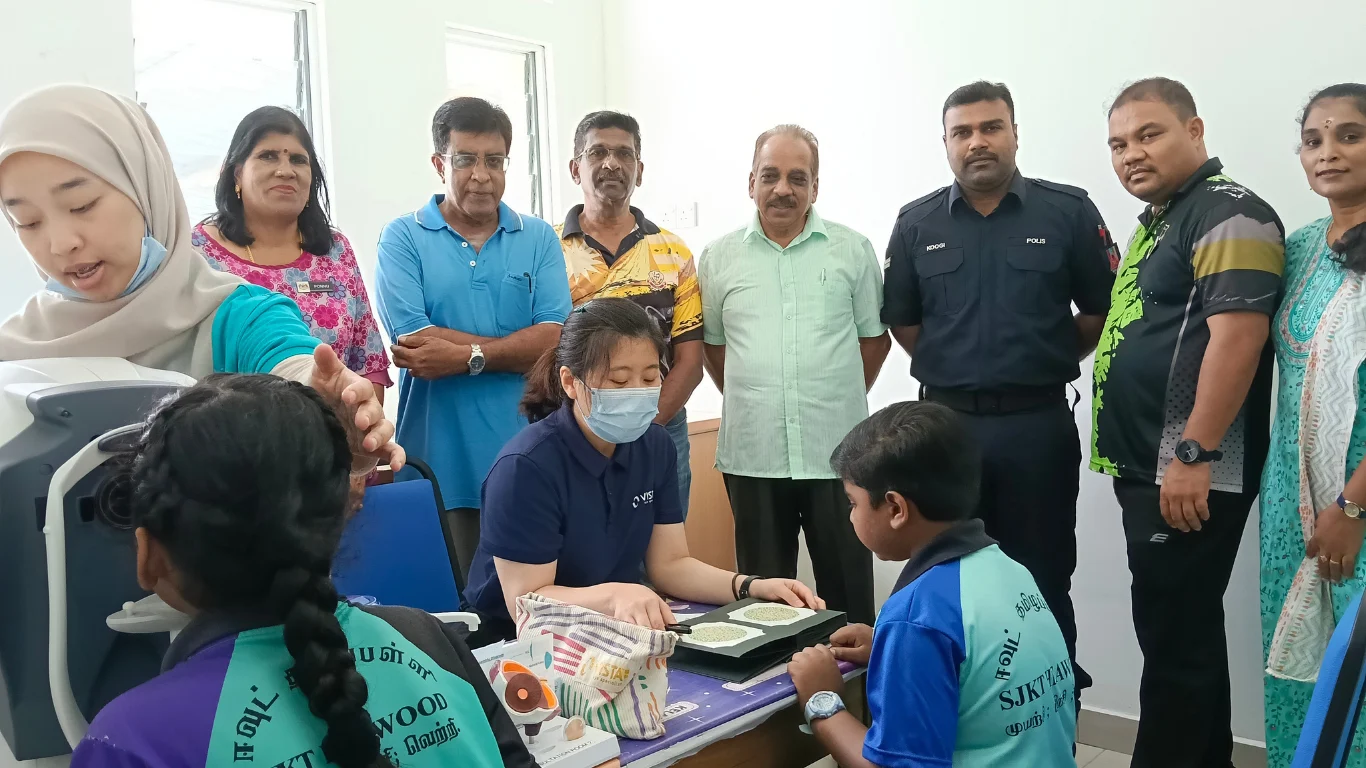
A total of 135 students from SJKT Heawood, Sungai Siput, underwent free eye screenings on 18 November 2026 as part of an initiative to promote better eye health among school students in Perak.
The programme was organised by Persatuan Kebajikan Amal Makmur Negeri Perak (PERKAM) in collaboration with Vista Eye Specialist Centre, Ipoh.
Since 2022, PERKAM has been conducting free eye screening programmes for school children across Perak with the support of the Perak State Education Department, various optical centres and private healthcare personnel. To date, approximately 23,500 students have been benefited from the initiative through screenings conducted at different schools throughout the state.
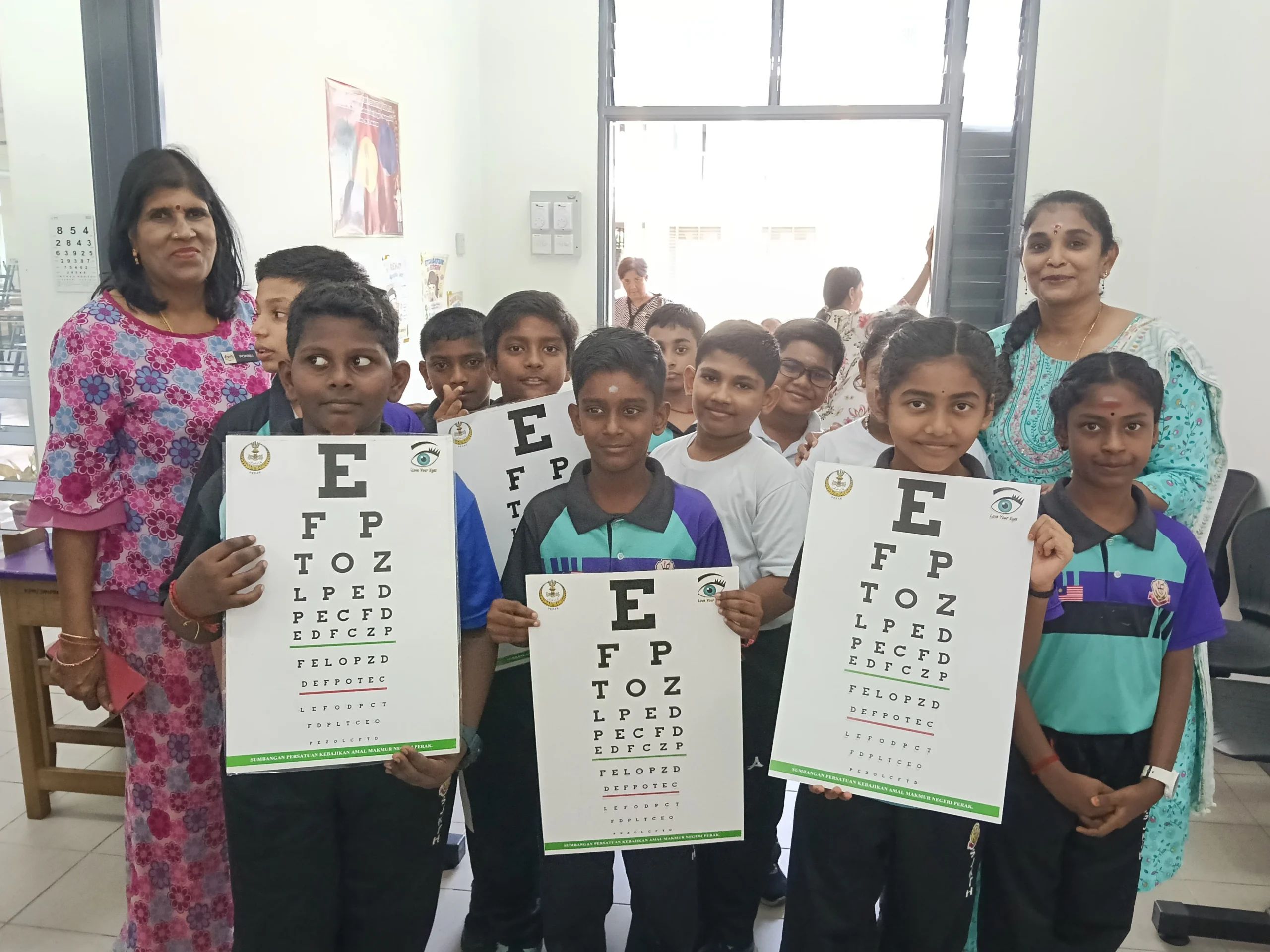
During the latest screening, several students were found to have vision impairments and were advised to undergo further comprehensive eye examinations at authorised optometry centres. PERKAM stressed that parents play an important role in ensuring their children receive the necessary follow-up examinations and treatment.
To ease the financial burden on families, the Malaysian Indian Transformation Unit (MITRA) is currently providing financial assistance of up to RM1,000 for eligible members of the Indian community to purchase spectacles and obtain other eye-related treatment at authorised optometry centres.
PERKAM Secretary and Free Eye Screening Programme Coordinator K. Nachemutu urged Indian parents to pay greater attention to their children’s eyesight, particularly those entering preschool and Year One in 2027. He encouraged parents to bring their children to optical centres or government clinics for early eye examinations.
He also highlighted how increased screen time involving mobile phones and other electronic devices, coupled with limited outdoor activities, could affect children’s vision.
Emphasising the importance of eye health in children’s education, Nachemutu noted that approximately 80% of a child’s learning takes place through visual observation. He encouraged parents to arrange regular eye examinations for their children, recommending at least two screenings a year.
The initiative highlights the importance of early detection and timely treatment, ensuring that children receive the visual care they need to support their learning, development and overall well-being.
This is a Varnam Exclusive Feature! Any Reproduction Requires A Credit To Varnam Malaysia.