

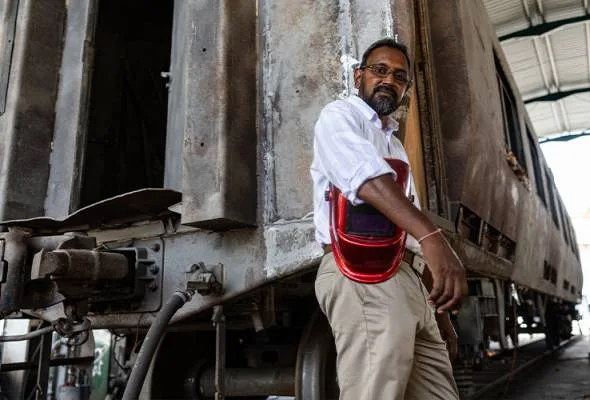
We are acquainted with seeing vehicles such as motorbikes, cars, and trucks being repaired or maintained, but we rarely consider railway carriages or locomotives.
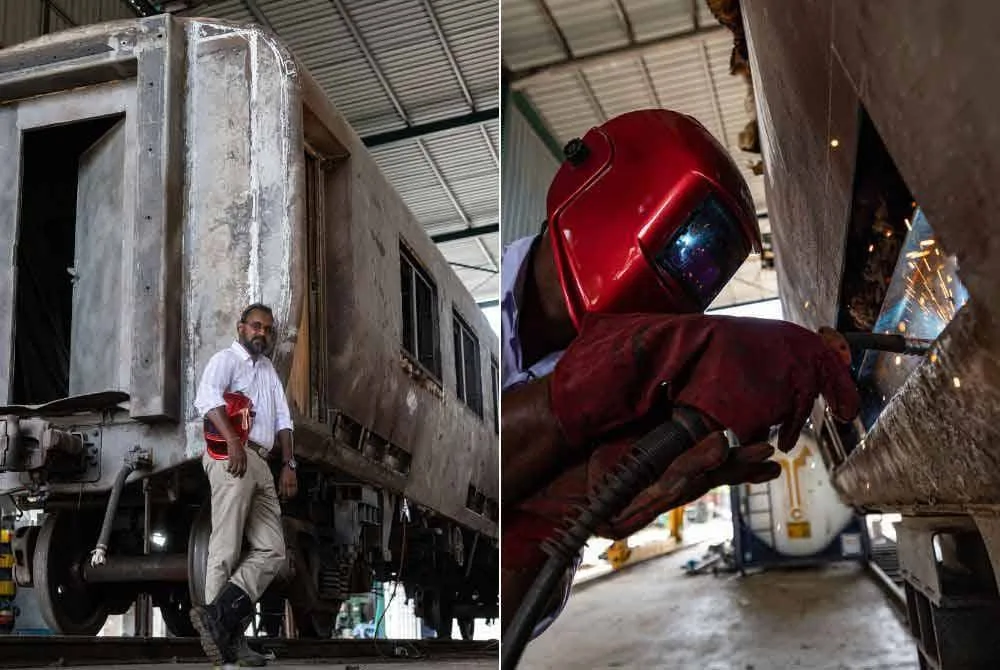
This scene, however, is seen on Jalan Tun Abdul Razak, where 49-year-old S. Ganesan and a group of his employees, including engineers, start working on railway carriages and locomotives that clients bring to his “workshop” at 8 a.m. This Ipoh native and private college IT graduate has a unique background as the fourth generation in his family to work in railway-related industries, and he shares his personal experience with the business.
“This is a fairly specialized field with a small but significant clientele of huge corporations. In 2018, I succeeded my late father, Datuk S. Suppiah, as the owner of this company. Chief Executive Officer of Rail freight Engineering and Logistic Sdn Bhd Ganesan remarked, I started from scratch and learned bit by bit from my father and the workers here.” Ganesan had no prior expertise of railway carriage maintenance.
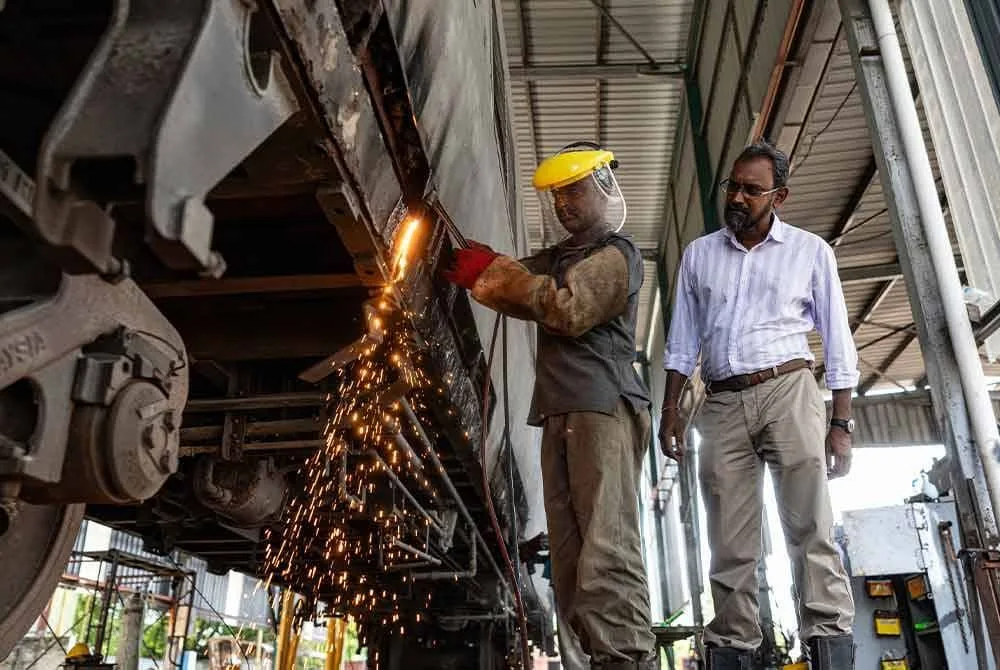
Ganesan claims that his grandfather Selvaratnam headed the ticket reservation department of Malayan Railway, his father drove forklifts for Keretapi Tanah Melayu Berhad (KTMB) before establishing his own business, and his ancestor Ayadurai, who was born in Jaffna, Sri Lanka, worked as a track maintenance worker for the same company.Being the only son out of two siblings, Ganesan first tried to avoid this area by working as a technical analyst at a telecommunications company in Shah Alam. However, in the end, he chose to support his father in the business.
Furthermore, we provide overhaul services that include repainting carriage bodies, sandblasting, and replacing locomotive and carriage components. Customers don’t have to move their locomotives or carriages somewhere else for testing because we have our own tracks set aside for post-overhaul testing,” he informed Bernama.
The 1.5 km of lines owned by Ganesan’s company are connected to the Ipoh Railway Station to enable the entry of client company carriages or locomotives from states that are associated with that station.
“These businesses usually use carriages to move their goods across the peninsula from one place to another. They may move their goods through the railway in up to 60 cars at once, according to Ganesan, a former college lecturer.
Ganesan explained that the locomotive system is not much different from other vehicle systems, except for the braking system that uses air pressure due to its movement on tracks.
“There are two types of locomotive engines, hydraulic diesel, which is similar to cars (with an engine or gearbox) those who study mechanical fields can easily understand this system, while the other type is diesel-electric or fully electric, which is more advanced.For those interested in this field, there are universities offering programs like at UniKL, or they can work with logistics companies like KTMB or companies like ours,” he added.
He also mentioned that his company is stepping up by introducing more advanced logistics technology, including locomotives capable of operating on both roads and tracks, as a result of collaborations with foreign companies. Looking ahead, Ganesan hopes that his two sons will continue his family’s legacy of providing continuous service to the country’s logistics sector by eventually taking over his position in the company.
Source : Bernama
Follow us on Instagram, Facebook or Telegram for more updates and breaking news.