



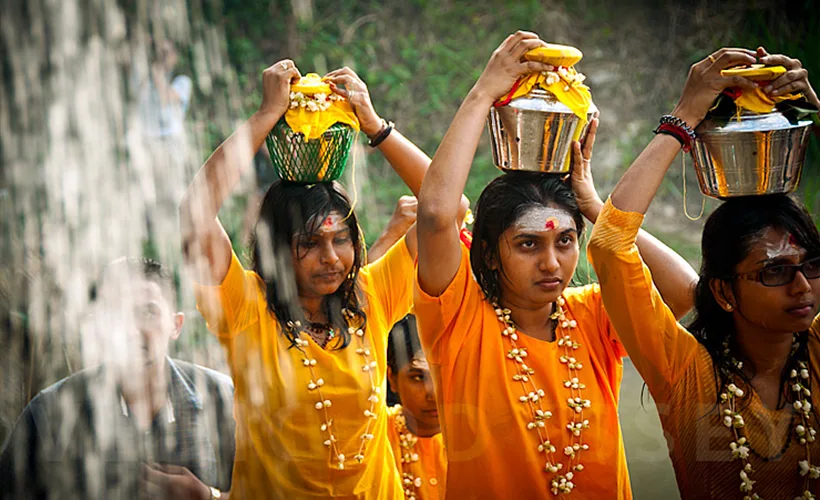
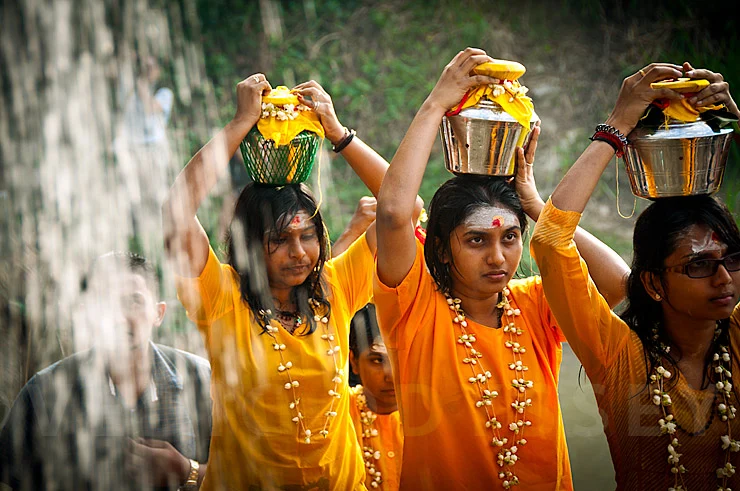
Devotees clad in yellow spill over numerous religious sites across the globe for Thaipusam. Some carry colourful Kavadi decorated with peacock feathers and bells, others carry silver containers with milk offering (paal sembu) and a handful pierce their tongues, cheeks, lips and back with spears, hooks and Vel (divine javeline) as a symbol of devotion and love for Lord Muruga.
Over the years, Thaipusam practices have been adapted to new practices and fast trends, like Kavadi with football club and political party logos, youngsters jiving to techno music at makeshift tents that serve free drinks for devotees called Pandhal and chariots trying to replicate Olympic medals (still waiting for a bronze chariot). With this much adaptation, the true meaning of Thaipusam sometimes can slip far into the peripheries of our sight.
To celebrate Thaipusam this year, we dive into everything you need to know about this festival and how time and trends have changed the practices over the years.
What is Thaipusam?
Let’s do a word breakdown: Thai is the 10th month in the Hindu calendar, Pusam is the name of a star which is at its highest point during this festival. Lord Murugan is the son of Lord Shiva, the destroyer and Goddess Parvathi, daughter of the Mountain King, Himavan. Lord Murugan is the Hindu God of war with three divine eternal functions — creation (sristi), protection (sthithi) and destruction (samhara) as evidenced by the three first letters in His name: MU — Mukundan (Vishnu), RU — Rudra (Siva) and KA — Kamalan (Brahma).
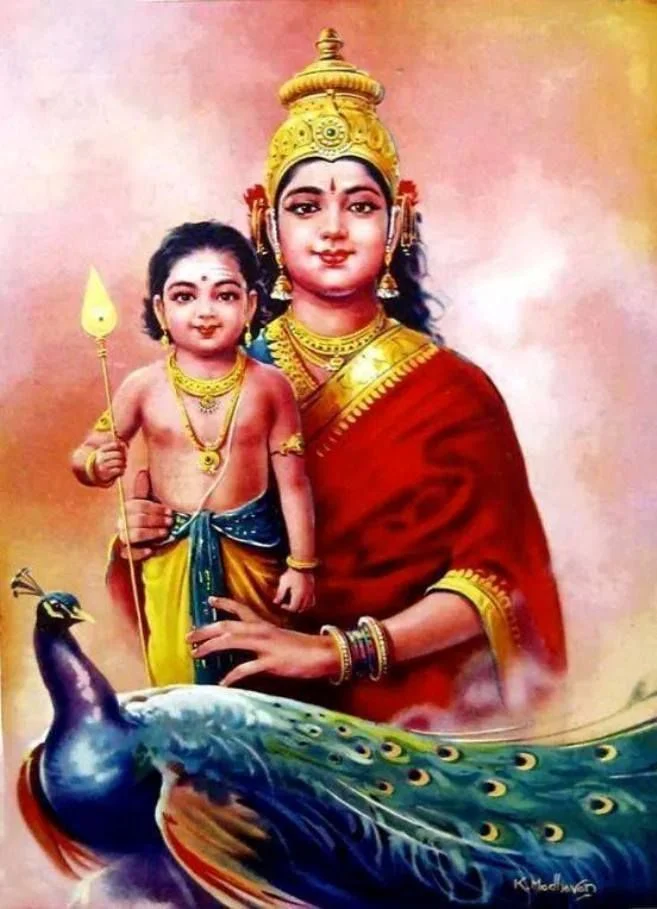
Lord Murugan is seen riding on a peacock, yielding a divine spear called Vel. Thaipusam is the celebration of the day Goddess Parvathi presented Lord Murugan with his Vel to vanquish the evil demon Soorapadman. In the modern day, Thaipusam is also celebrated to overcome obstacles in life, destroy one’s bad traits and for self-purification.
Thaipusam In Malaysia
Thaipusam was first celebrated at Batu Caves in 1888 and it’s now the largest and most significant Hindu public display in the country.
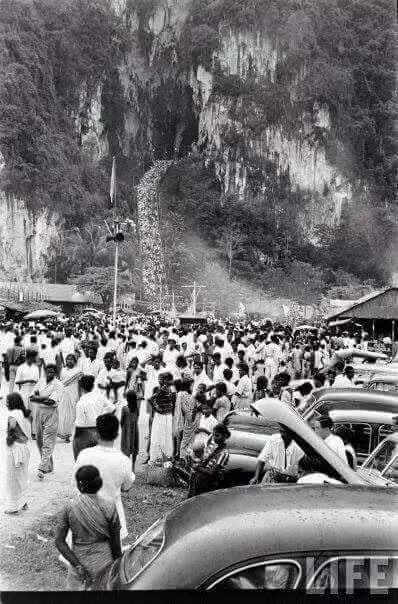
This year, over 1.6 million devotees attended the festival in Batu Caves and hundreds more thousands celebrated Thaipusam at Hilltop Temple in Penang and Kallumalai Temple in Perak. Roads were blocked and hundreds of enforcement officers were stationed to ensure the safety of the crowd.
Batu Caves Thaipusam, 2019What is a Kavadi?
Kavadi comes from the word Kaavu and Thadi, which is structure loaded with offerings, usually milk, balanced on a weight bearing pole and decorated with images of deities, flowers, peacock feathers, bells and even LED lights, in more recent times. There 4 types of Kavadi: Paal Kavadi (carrying pots of milk), Alangara Kavadi, Pushpa Kavadi and Karumbu Thodi. The devotees walk with a Kavadi on their shoulders for miles to the temples barefeet. The person carrying the Kavadi goes through a period of fasting in preparation of the celebration.
Paal Kavadi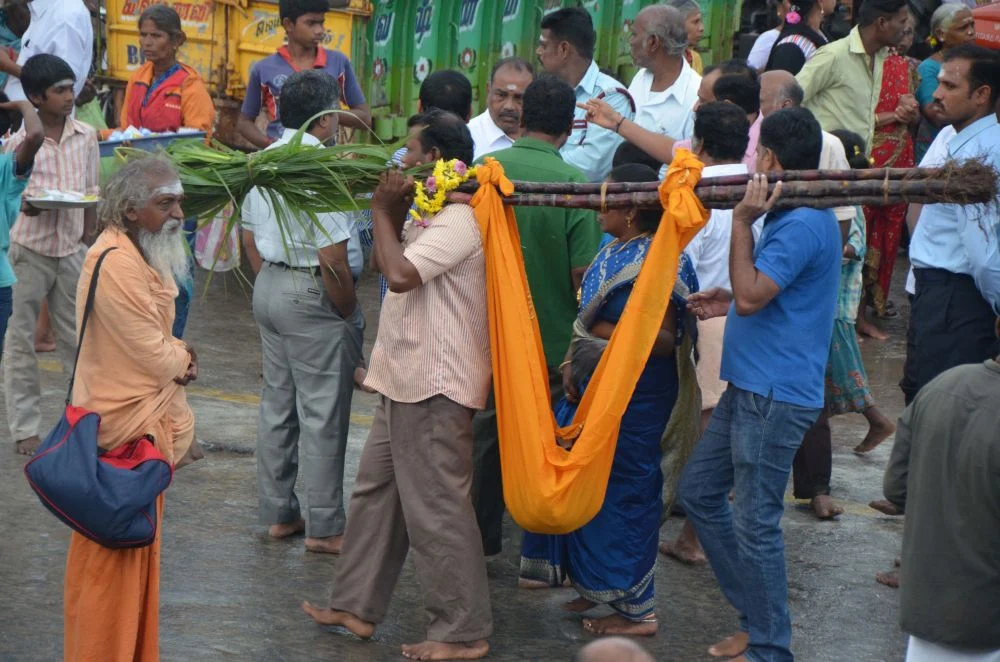
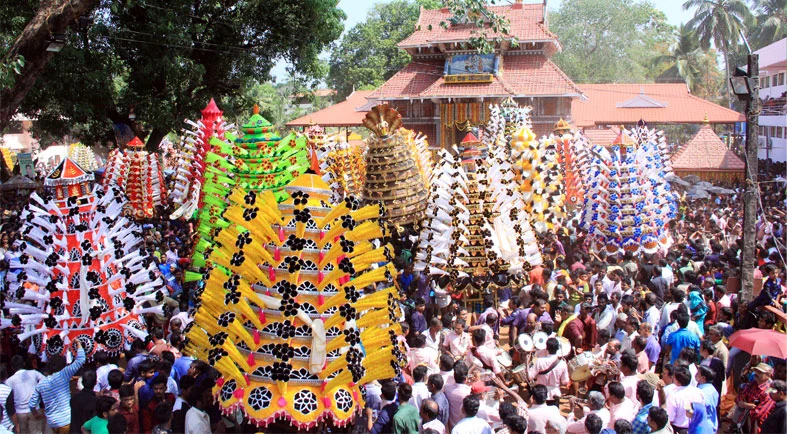
Piercing: A form of Penance
Many cultures around the world observe a degree of self-mutilation as a form of penance for their wrongs such as the Crucifixion in the Philippines. During Thaipusam, some devotees pierce their tongue and cheeks with spears and other hook their backs. Devotees are worked into a state of trance before temple piercing experts stick metal through flesh with no numbing effects. The devotees wear their piercings till they reach the temple, sometimes lasting for hours. Once devotees complete their journey to the temple, their piercings are removed and smeared with holy ash and sandalwood.
For the spectator, Thaipusam is a visual feast of colours and celebrations. Drum beats echo through the streets and devotees sing and dance their way throughout the journeys. Spirits are kept high despite gravel on the road, fatigue in the feet and piercings through flesh. Devotees complete their ritual and return home feeling purified and invigorated, hoping that the future brings blessings after the cleansing.
They place their faith in the divine powers of Lord Murugan for another year of happiness, health and abundance.
Source: BBC , Channel News Asia