



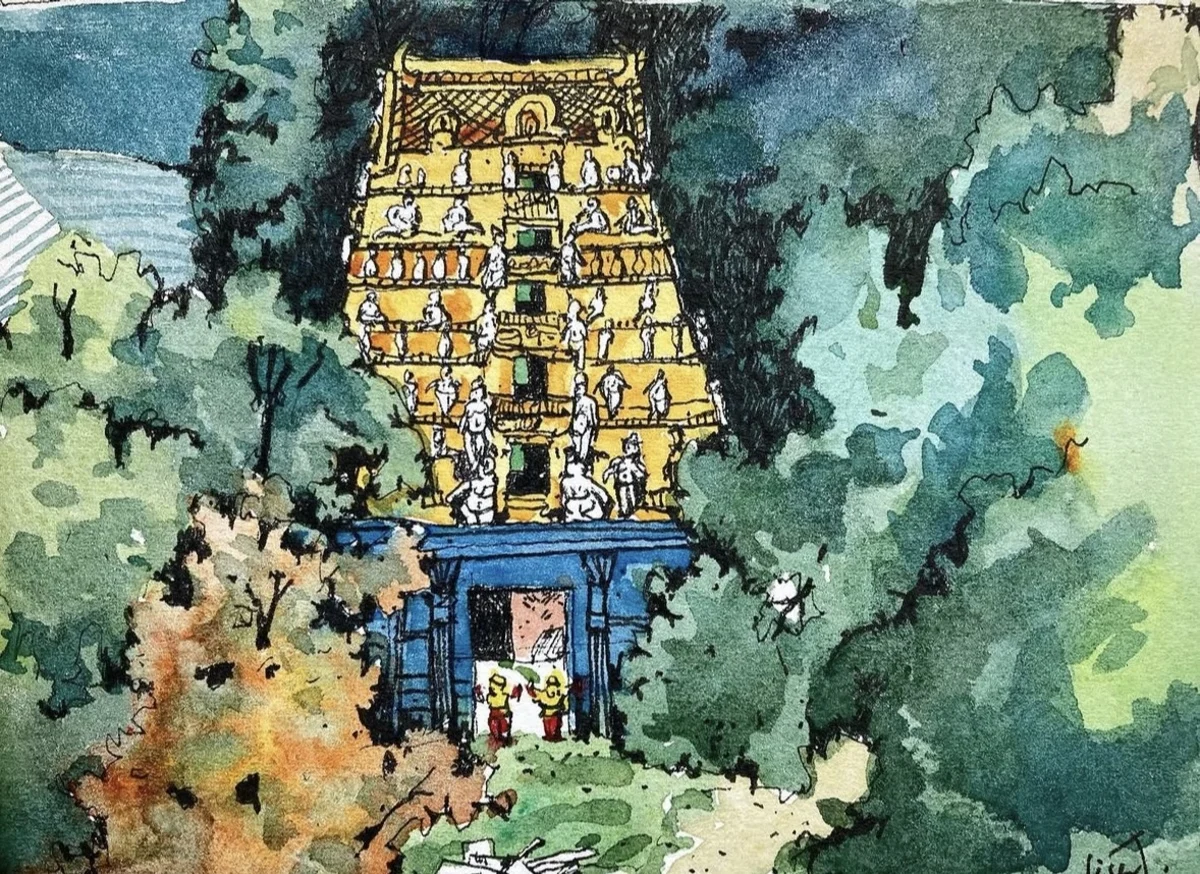
On June 7, the German capital witnessed a historic moment as the Sri Ganesha Temple officially opened its doors in Berlin’s Neukölln district. Followed by an elaborate five-day consecration ceremony, the temple has emerged as one of the largest Hindu temples in Europe. As an emblem of India’s cultural and spiritual legacy, the temple is set to welcome devotees from diverse ethnic backgrounds.
The temple is expected to serve not only as a place of worship but also as a hub for cultural exchange in one of Europe’s most diverse capitals. For the Tamil Hindu community in Berlin, the inauguration of this magnificent temple is not just another ordinary day in history. It was the fulfilment of a decades-long dream.
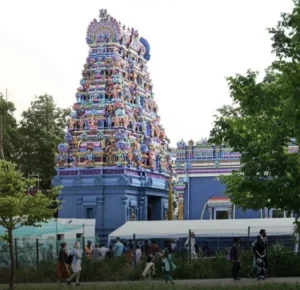
The temple was established on September 24, 2005, and consecrated 21 years later, on June 7, 2026. Supported by devotees and volunteers determined to build an authentic South Indian temple in the heart of Germany, the construction of this project commenced in 2009.
The year was 2015 when the first Gopuram tower was erected. To ensure that the temple reflected the rich architectural heritage of South India, hand-carved black granite was imported from Tamil Nadu. The temple’s most exceptional feature is its 17-meter-high main tower, which now stands proudly against the Berlin skyline.
The official inauguration of the temple took place from June 3 to June 7, with priests hailing from India and various European countries gathering to execute the sacred rituals like the Mahakumbhabhishekam.
Berlin is home to an estimated 6,000 Hindus, many of whose roots go back to India and Sri Lanka.
It was an emotional and deeply meaningful day for many attendees. Others noted that the temple also serves as a bridge between cultures, creating opportunities for people from different cultural backgrounds to acquire knowledge about Hindu tradition and values.
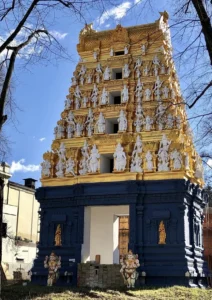
Beginning as a shared aspiration by a small community, this cultural monument has now become a permanent landmark for celebrating festivals, performing prayers and simply learning about the Indian heritage.
Sources: Astro Ulagam, Organiser and Hindu Existence