



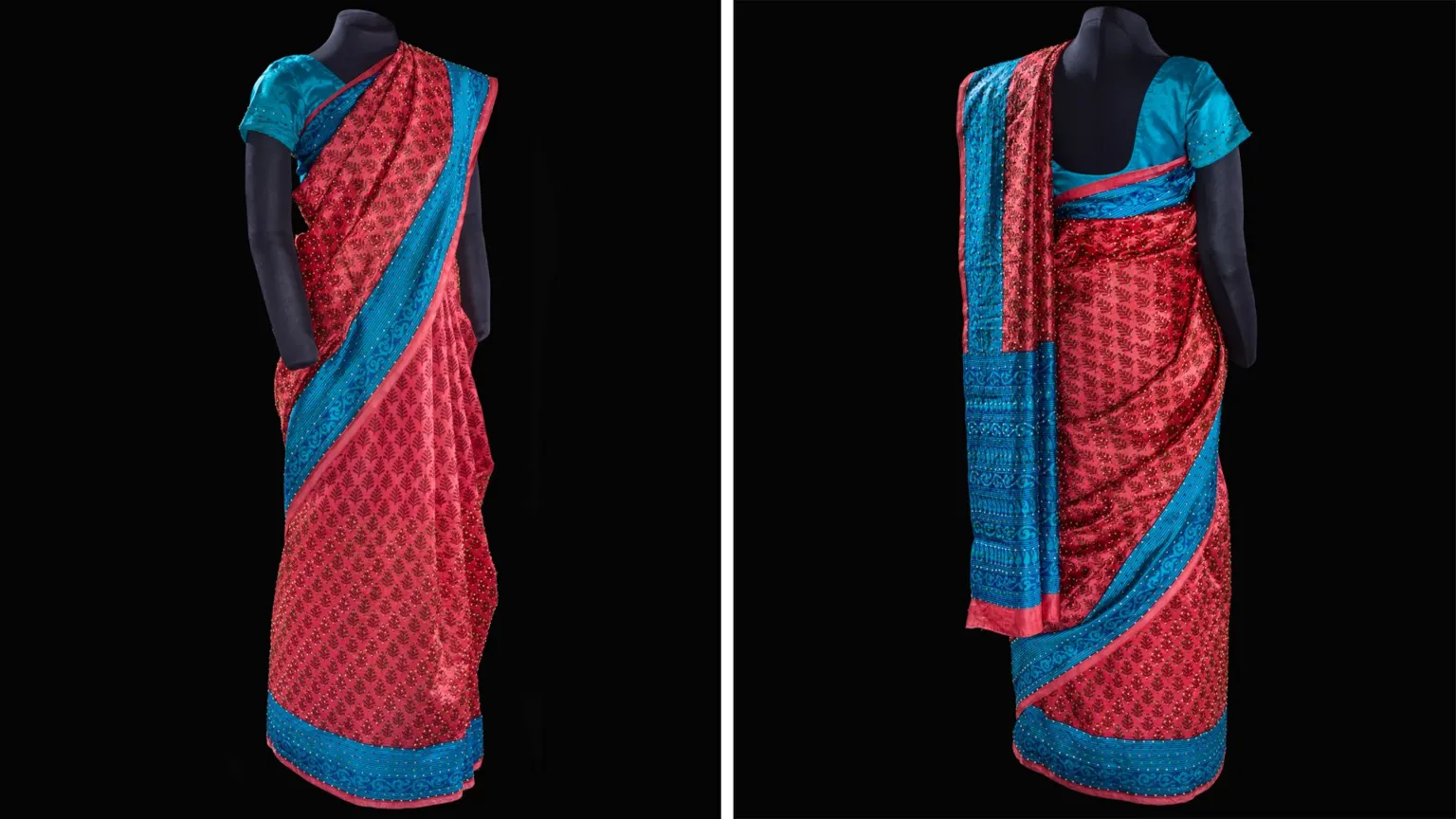
On a day that Nandini Harinath denotes as the most important day of her life, the Indian space scientist emerged at the office in a vibrant red and blue sari. That sari is now in pride of place in the Smithsonian’s National Air and Space Museum in Washington.
Nandini, who was the deputy operations director for Mangalyaan, India’s maiden Mars Orbiter Mission, wore the outfit on 1 December 2013.
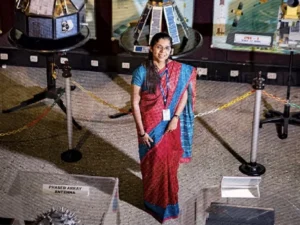
For Nandini, saris, especially those presented by her father, have always been a go-to outfit for milestone days at work or whenever she represents India’s space agency.
So, when the single most important occasion of her life arose, it was a no-brainer that she was going to wear a sari. Nandini and other scientists from the Indian Space Research Organisation (ISRO) were in the control room to launch the spacecraft out of Earth’s orbit and send it on its 300-day journey towards the Martian orbit
“It was a do-or-die moment, the most critical operation in the mission,” Nandini told the BBC in 2016. “We had to decide where the spacecraft goes, how it goes and when it goes. The success of the mission depended on what we did that day.”
Matt Shindell, a space history curator at the Smithsonian Museum, had reached out to Nandini in 2020 via email, and the two got discussing what object would best represent India’s Mars mission and her role in it.
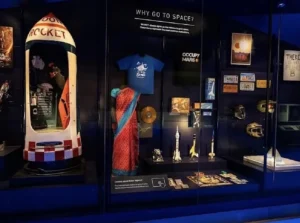
“I asked her what object she’d be willing to part with. We agreed on the sari that she was wearing on the day Mangalyaan left Earth’s orbit,” Shindell said.
As soon as the sari and the matching blouse had arrived at the museum, textile conservator Beth Knight watched YouTube videos to learn how to drape it on a mannequin.
Shindell also added that Nandini’s sari contributes to two motivations, “One, it’s a symbol of India’s national pride in its first Mars mission and the country’s successful space programme. The second is her personal story, which is inspiring as her success could encourage more women to pursue careers in science.”
Another prominent reason as to why the sari was chosen is for its cultural value and its distinctiveness. Beyond the fact that the Smithsonian sees it as a symbol of India’s achievement in reaching Mars, the garment also stands as a testament to the contributions of women in space science. It is the museum’s first India-related object in the interplanetary exploration collection.
The story of this spectacular mission was adapted into a Bollywood film in 2019. The film, directed by Jagan Shakti, follows a group of scientists at ISRO struggling to strike a balance between personal and professional life while simultaneously working tirelessly towards a shared motive, the Mars Orbiter mission. Mission Mangal (2019) starred Vidya Balan, Taapsee Pannu, Nithya Menen, Sonakshi Sinha, Kriti Kulhari and Akhshay Kumar in prominent roles.
Source: BBC India