



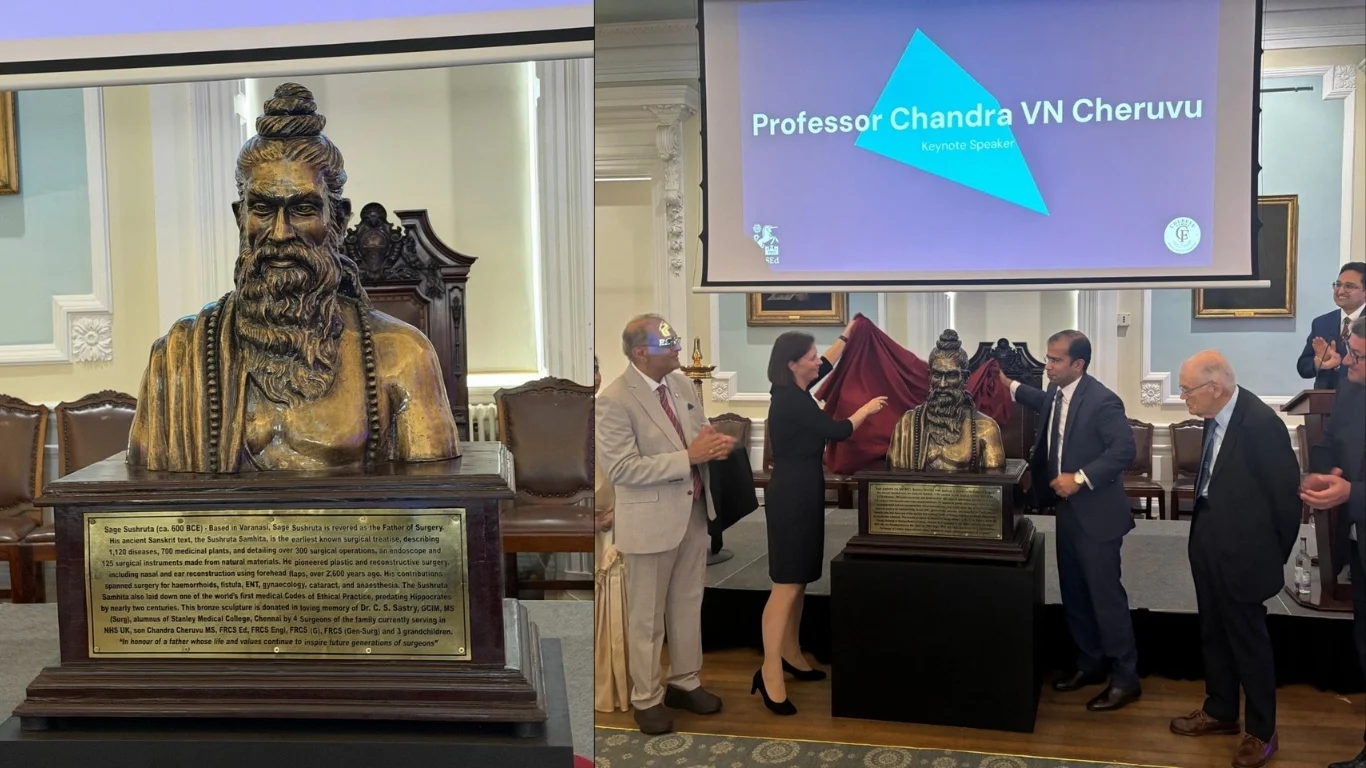
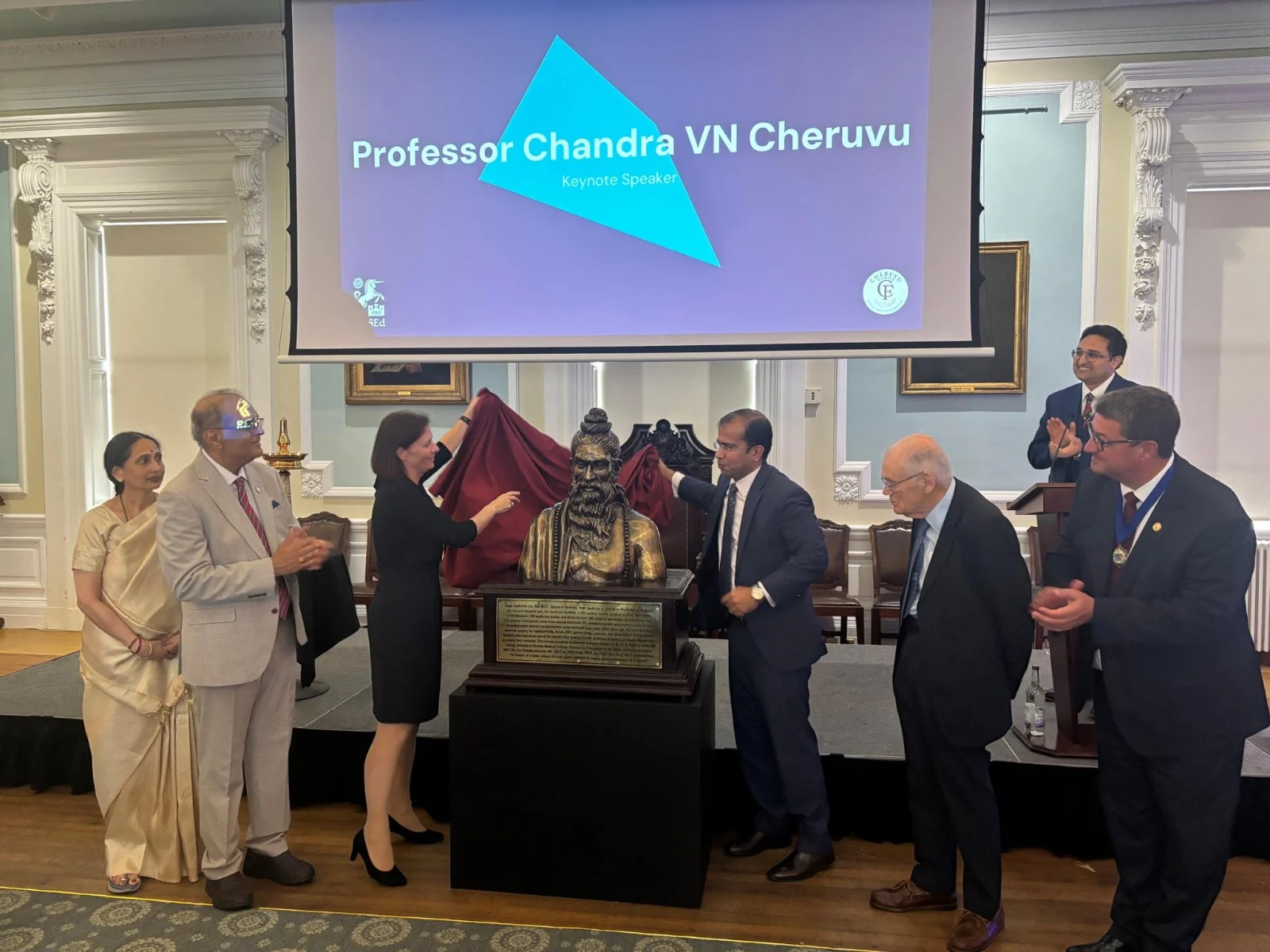
A bronze statue of the ancient Indian surgeon Sushruta, has been unveiled at the Royal College of Surgeons in of Edinburgh, Scotland. Sushruta is widely regarded as the father of surgery. This recognition highlights India’s significant contributions to the development of medicine and surgery and also highlighting Sushruta’s enduring influence on modern healthcare.
Sushruta’s statue was donated by Professor Chandra Cheruvu, a renowned surgeon, as part of a wider initiative to celebrate medical heritage and support the next generation of healthcare professionals. In addition to the statue donation, the Cheruvu Family Professional Development Grants were launched to provide educational and training opportunities for surgeons worldwide.
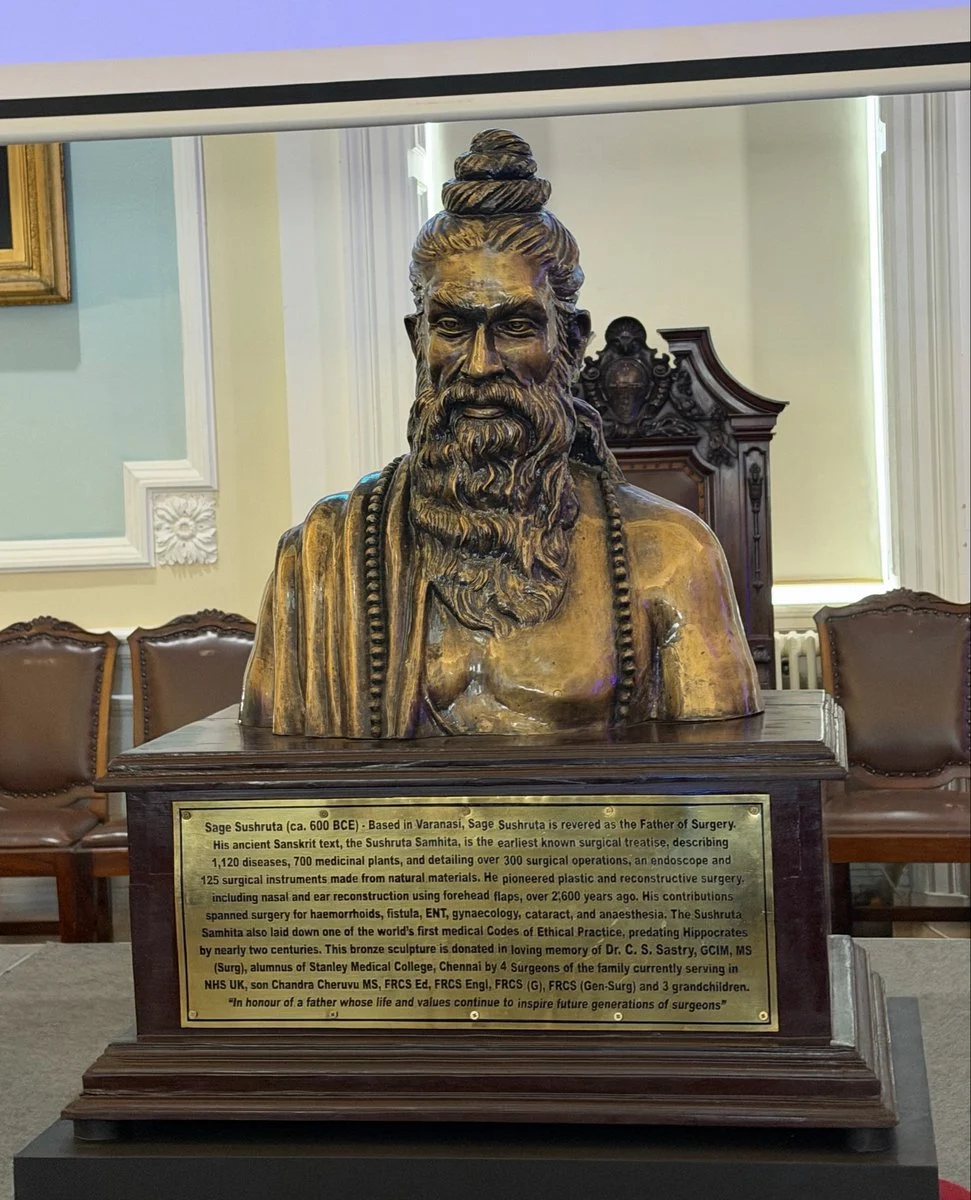
Maharishi Sushruta: The Father of Surgery
Sushruta is believed to have lived more than 2,500 years ago in ancient India and is credited with compiling the Sushruta Samhita, one of the world’s earliest and most comprehensive surgical texts. He is particularly known for pioneering techniques in reconstructive surgery, including rhinoplasty, earning him recognition as a pioneer of surgical science.
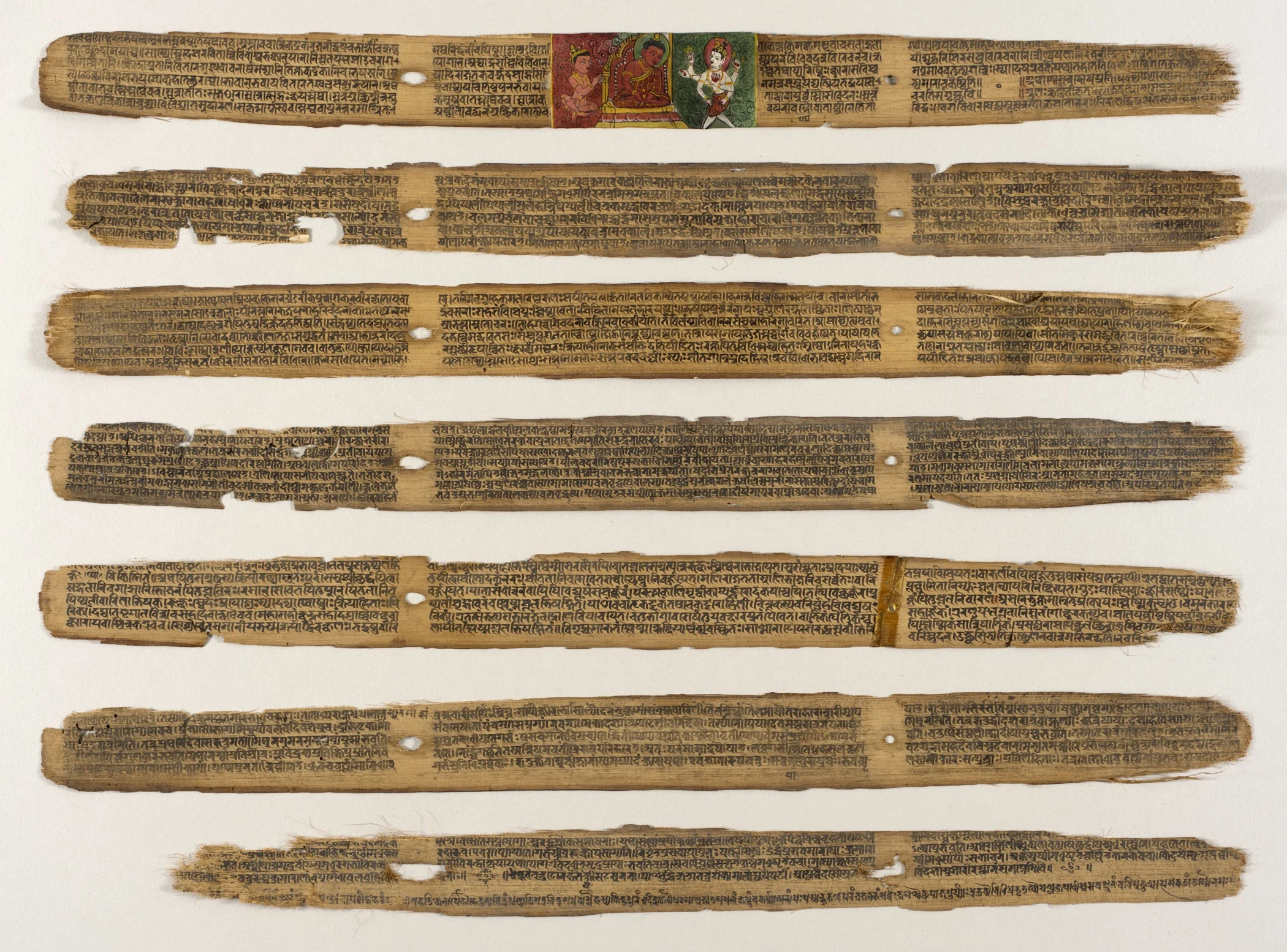
Sushruta’s Significant Contribution: Sushruta Samhita
Sushruta made monumental contributions to medical science that were ahead of their time, laying the groundwork for modern practices. His texts, which is called as Sushruta Samhita, detail over 300 surgical procedures. Additionally, it includes one of the earliest documented methods of reconstructive surgery, Sushruta also described more than 120 surgical instruments, many of which resemble modern forceps, scalpels, and speculums. This highlights the significant contributions of ancient Indians to the medical field, showcasing their advanced knowledge in surgery.
According to the Royal College of Surgeons of Edinburgh, the statue will become a permanent part of its heritage collection, symbolising the global history of surgery and the importance of knowledge-sharing across cultures and generations.
The institution noted that Sushruta’s teachings on surgical training, instruments, and patient care continue to resonate with medical professionals today.
The unveiling marks a significant moment in acknowledging India’s ancient medical achievements on an international stage. It also reinforces the longstanding relationship between India and the United Kingdom in the field of medicine, while inspiring future generations of surgeons to build upon a legacy that spans centuries.
Source: News18