



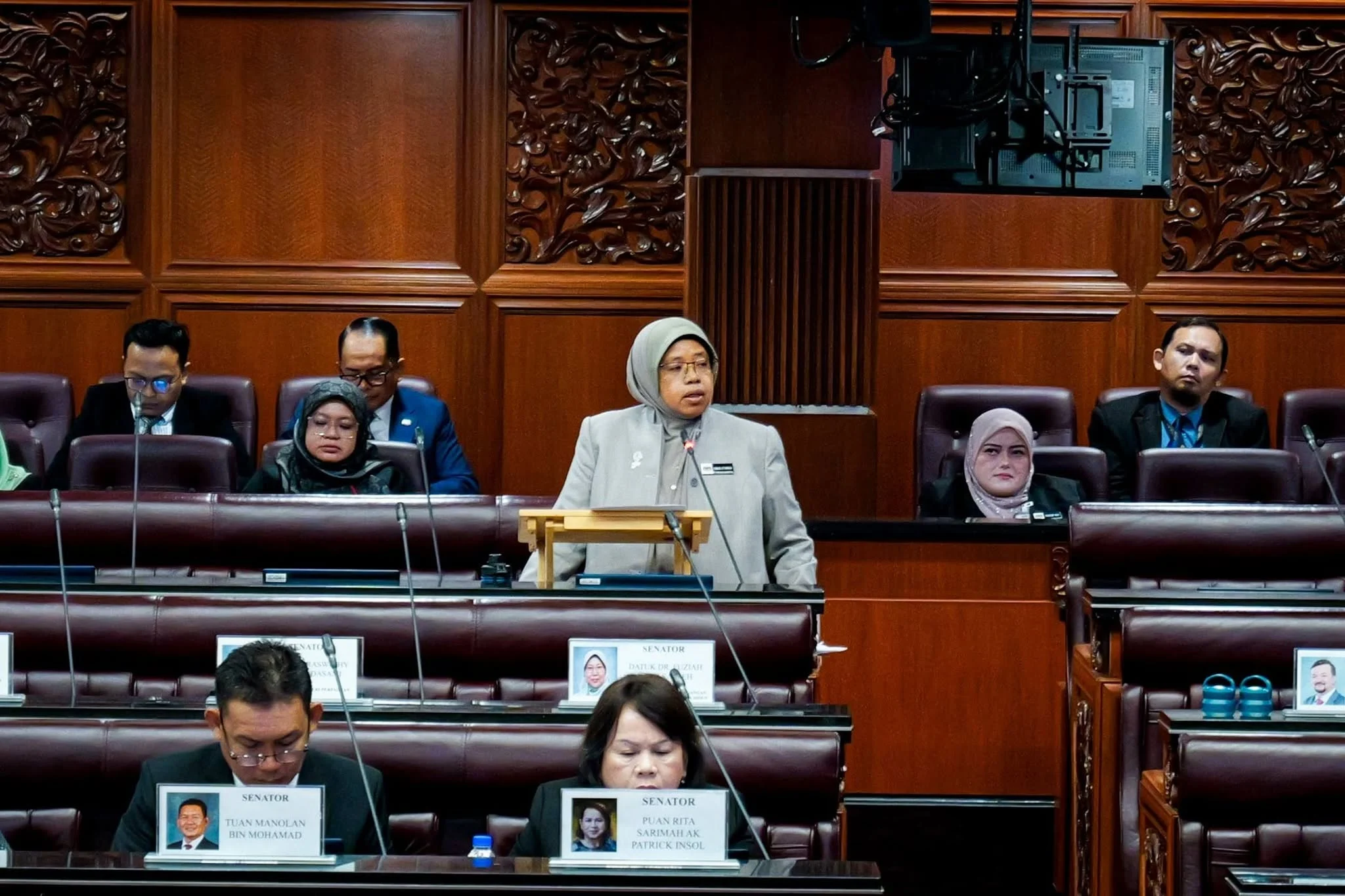
The Ministry of Housing and Local Government (KPKT) approved 594 development projects for new Chinese and Indian villages nationwide this year, involving a total allocation of RM73 Million.
Deputy Housing and Local Government Minister Datuk Aiman Athirah Sabu said the project includes 573 developments in Chinese New Villages and 21 projects in Indian villages.
Improving Infrastructure and Housing
For Chinese new villages, 366 infrastructure development projects have been approved. Out of the 366, 148 projects have been completed while 218 are currently being carried out.
Under Housing Repair Assistance Programme, 197 projects have been approved, with 47 completed and 150 still in progress. Meanwhile, 10 projects have been approved under the New Village Housing Construction Assistance Programme, which has yet to begin.
Aiman Athirah shared the updates as a response to a question from S.Kesavan (PH-Sungai Siput) during Dewan Rakyat’s discussion on the current status of development projects and basic infrastructure in Chinese new villages and Indian Villages.
Support for Indian Villages
For Indian villages, the approved projects is for 18 villages in Johor, Melaka, Selangor, Kuala Lumpur, Perak and Negeri Sembilan. The RM2 Million allocation will be to improve infrastructure, public facility, and safety within the villages.
So far, 5 projects has been completed, 13 are under construction, and two projects are still in the procurement stage and one project is still being planned.
Aiman Athirah said the government allocated RM328.9 Million for development projects in 613 Chinese new villages from 2023 to 2025.
For Indian villages, special allocation started in 2025, with a total of RM15 Million given through two major initiatives. This includes RM10 Million under KPKT’s 2025 Budget involving 54 projects and RM5 Million under the Indian Community Socioeconomic Development Programme through MITRA.
The initiative is expected to help 22,144 residents across 50 Indian villages through 87 development project to improve living conditions and community facilities.
Sources: Bernama