



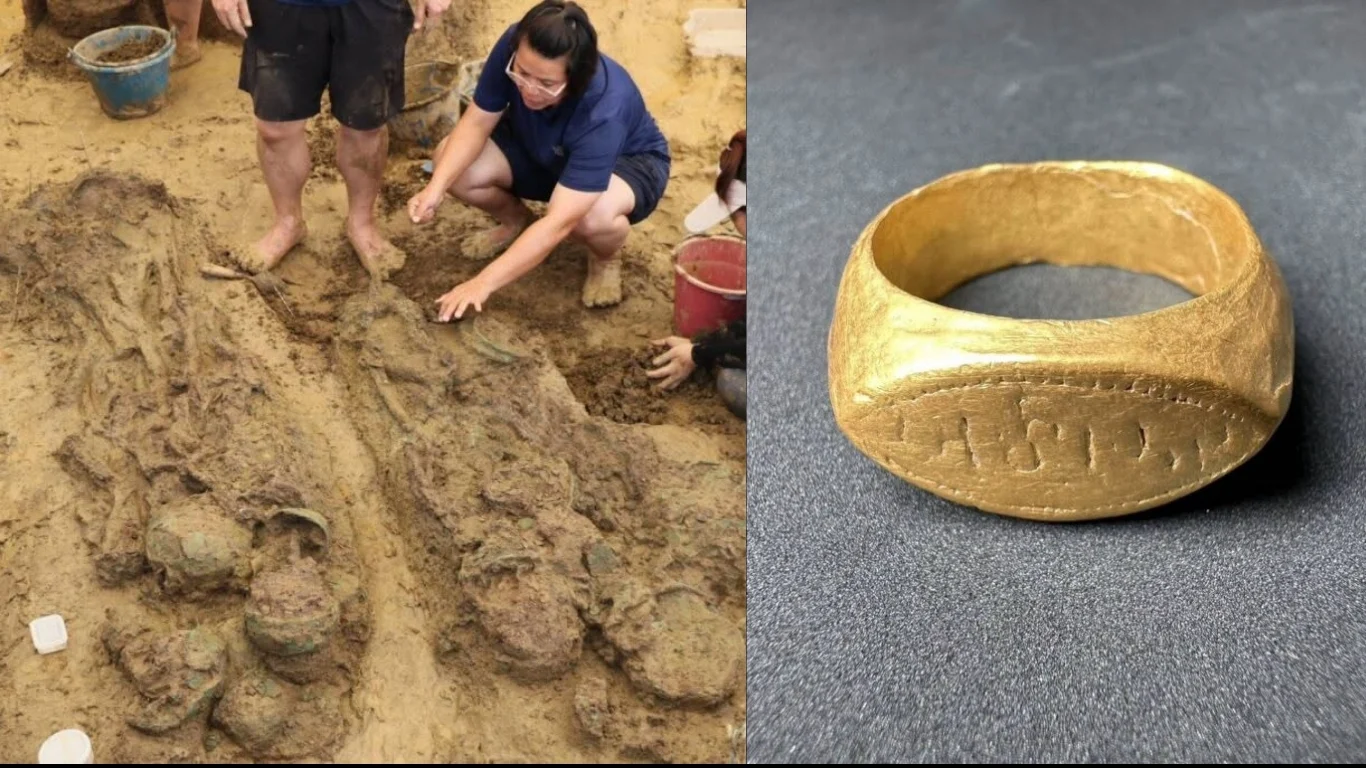
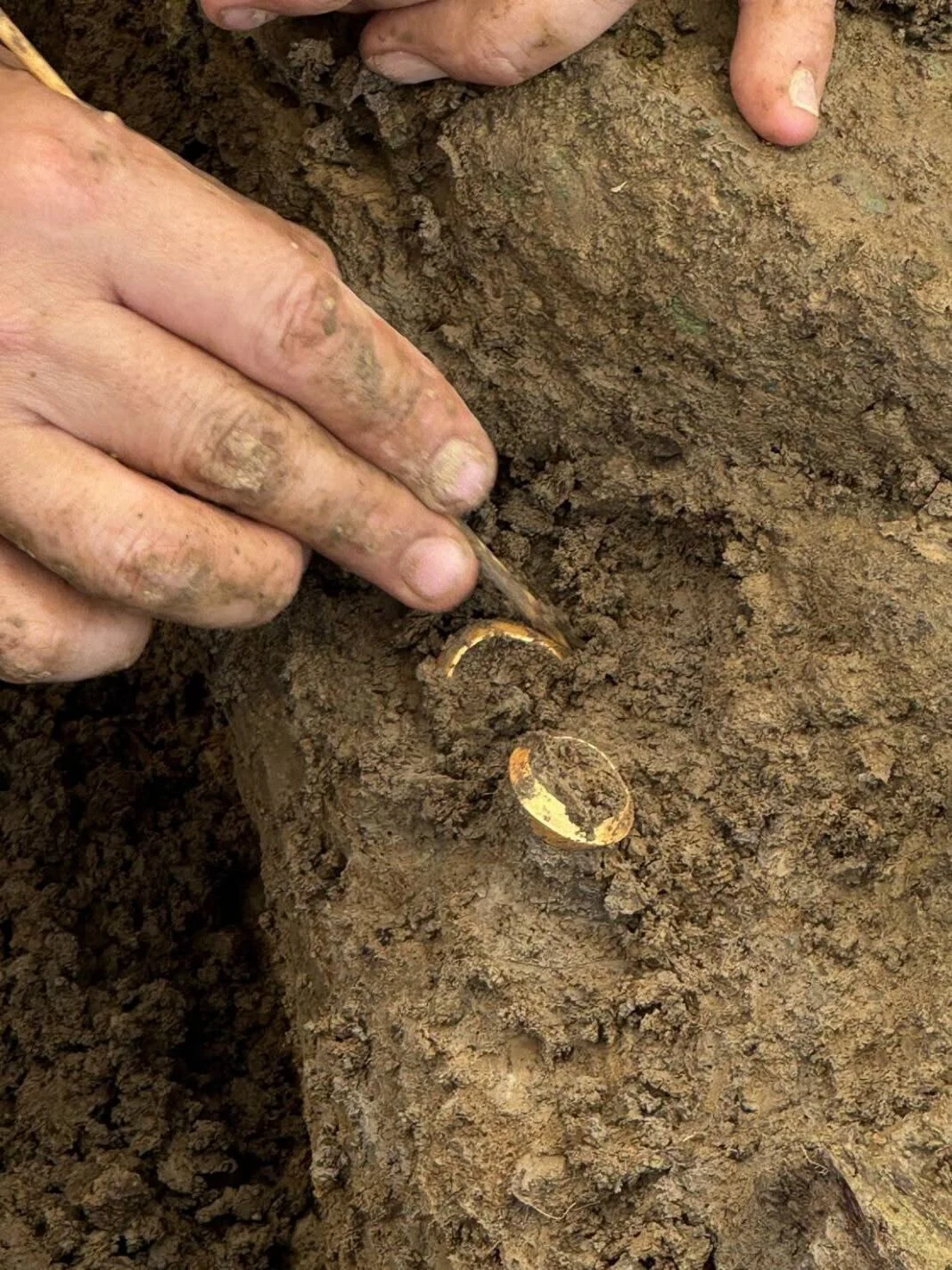
An archaeological discovery in Thailand has shown the deep historical connections between India and Southeast Asia. Recently, archaeologists from Thailand’s Fine Arts Department found two ancient gold rings at the Don Yai Thong archaeological site in western Thailand. It is believed that the gold rings are around 2,000 years old.
The discovery has attracted attention among historians and archaeologists as it provides valuable evidence of early cultural and commercial exchanges between the Indian subcontinent and Southeast Asia.
Brahmi Inscription Offers Clues About Indian Influence
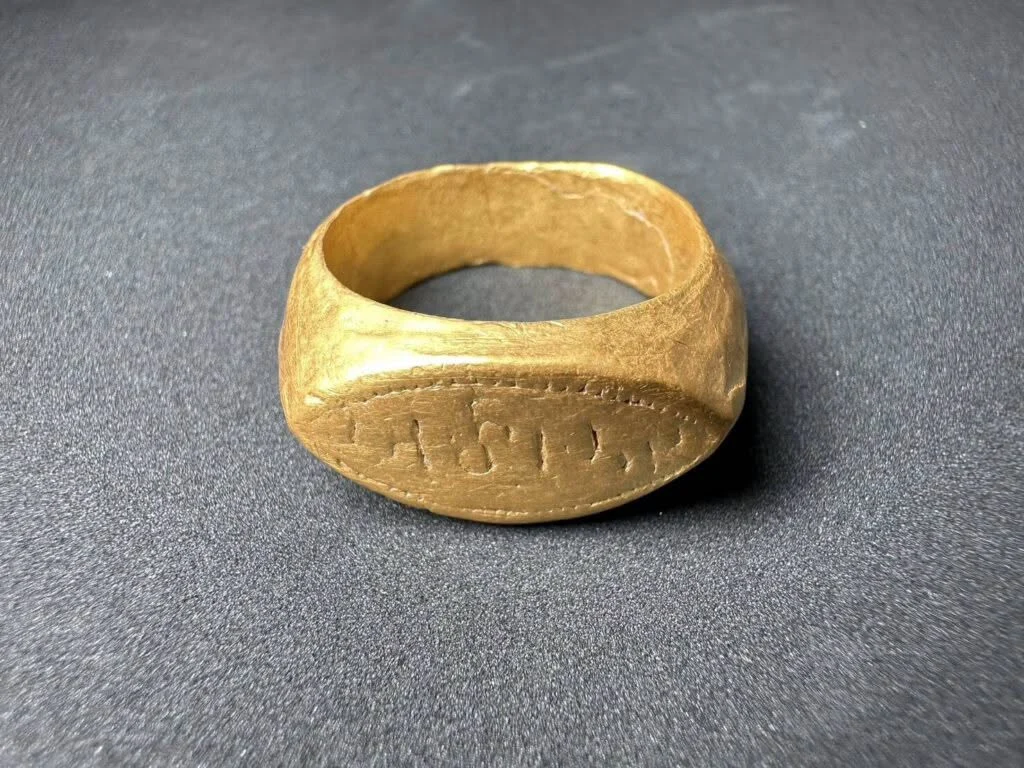
The most significant feature of the discovery is the inscription found on one of the gold rings. Experts believe the writing is in Brahmi script and reads “pusarakhitasa”, which is interpreted as meaning “the one protected by Pushya.”
In ancient Indian tradition, Pushya is considered an auspicious lunar constellation associated with prosperity, protection, and good fortune. The use of an Indian script and a name connected to Indian beliefs suggests that the person who owned the ring may have had links to Indian culture, either through ancestry, trade, or cultural influence. Brahmi was widely used across ancient India and later influenced the development of several writing systems throughout South and Southeast Asia.
Discovery Highlights Ancient Trade Routes
The gold rings provide further evidence that maritime connections between India and Southeast Asia existed more than two millennia ago. Ancient Indian traders, sailors, and religious scholars travelled across the Bay of Bengal, establishing links with regions that are today known as Thailand, Malaysia, Indonesia, Cambodia, and Vietnam.
These interactions were not limited to trade alone. Along with goods such as spices, textiles, and precious metals, Indian communities also shared languages, scripts, religious ideas, art forms, and cultural practices. The presence of a Brahmi inscription in Thailand suggests that Indian cultural influences reached the region much earlier than previously documented through written historical records.
Possible Link to an Indian Merchant Community
According to initial interpretations by Thai authorities, the individual buried with the gold rings may have been connected to an Indian merchant community.
The valuable jewellery and the inscription have led researchers to believe the person may have belonged to a wealthy or influential group.
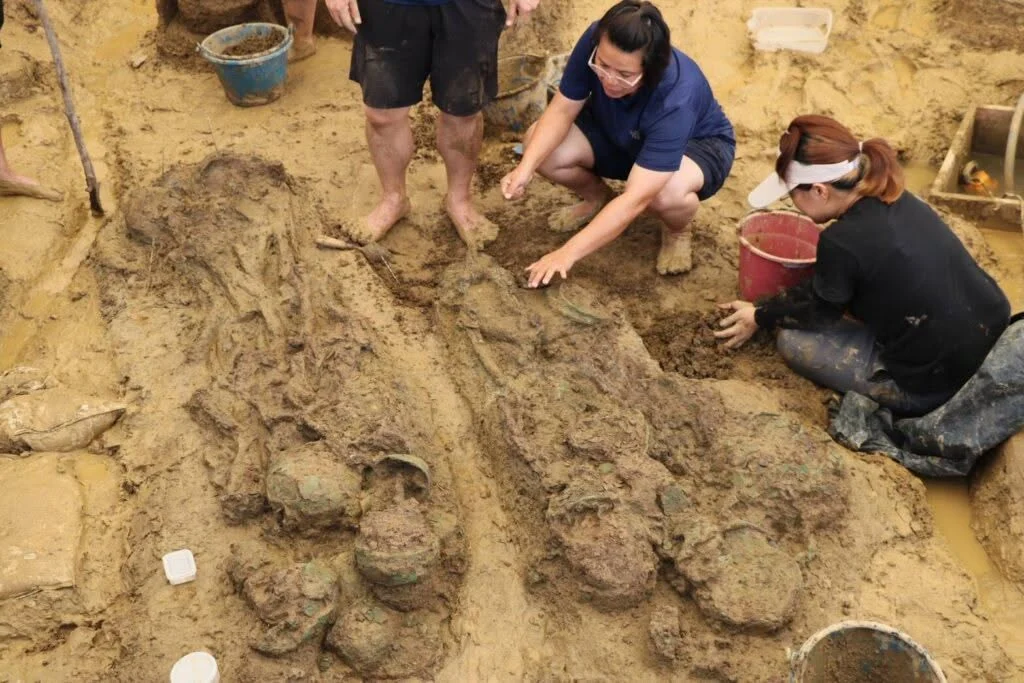
However, archaeologists have stated that further studies are needed before confirming the person’s exact identity, background, or place of origin. The discovery forms part of a larger excavation at the Don Yai Thong site, where archaeologists have uncovered several ancient remains, including human skeletons, jewellery, pottery, bronze objects, and other artefacts.
Don Yai Thong Archaeological Site
The Don Yai Thong archaeological site is believed to date back to Thailand’s Iron Age, a period between approximately 1,500 and 2,500 years ago. The findings indicate that the area was once home to communities with advanced craftsmanship, burial traditions, and connections with wider regional networks. The gold rings, particularly the one carrying the Brahmi inscription, provide historians with important clues about the movement of people and ideas across ancient Asia.
Strengthening the Shared Heritage of Asia
The discovery of the Indian gold rings in Thailand highlights the centuries-old relationship between India and Southeast Asia. Long before modern borders existed, communities across the region were connected through oceans, trade routes, and cultural exchanges.
For countries such as Malaysia, Thailand, Indonesia, and Cambodia, archaeological discoveries like this serve as reminders of the shared heritage that links South and Southeast Asian civilisations.
Source: Hindustan Times, Times of India